How fast a box is
How much faster is a box than what the standard library already gives you?
This page answers with measurements: benchbox times sharedbox against
each way the standard library offers to share data between processes. The
charts come from one run of benchbox all followed by benchbox plot, on
Windows 11 with an AMD Ryzen 9 7945HX, CPython 3.11 and a development
version of sharedbox after 0.3.1, so your own numbers will differ.
How to run the benchmarks shows how to make
the same charts on your own machine.
Single operations
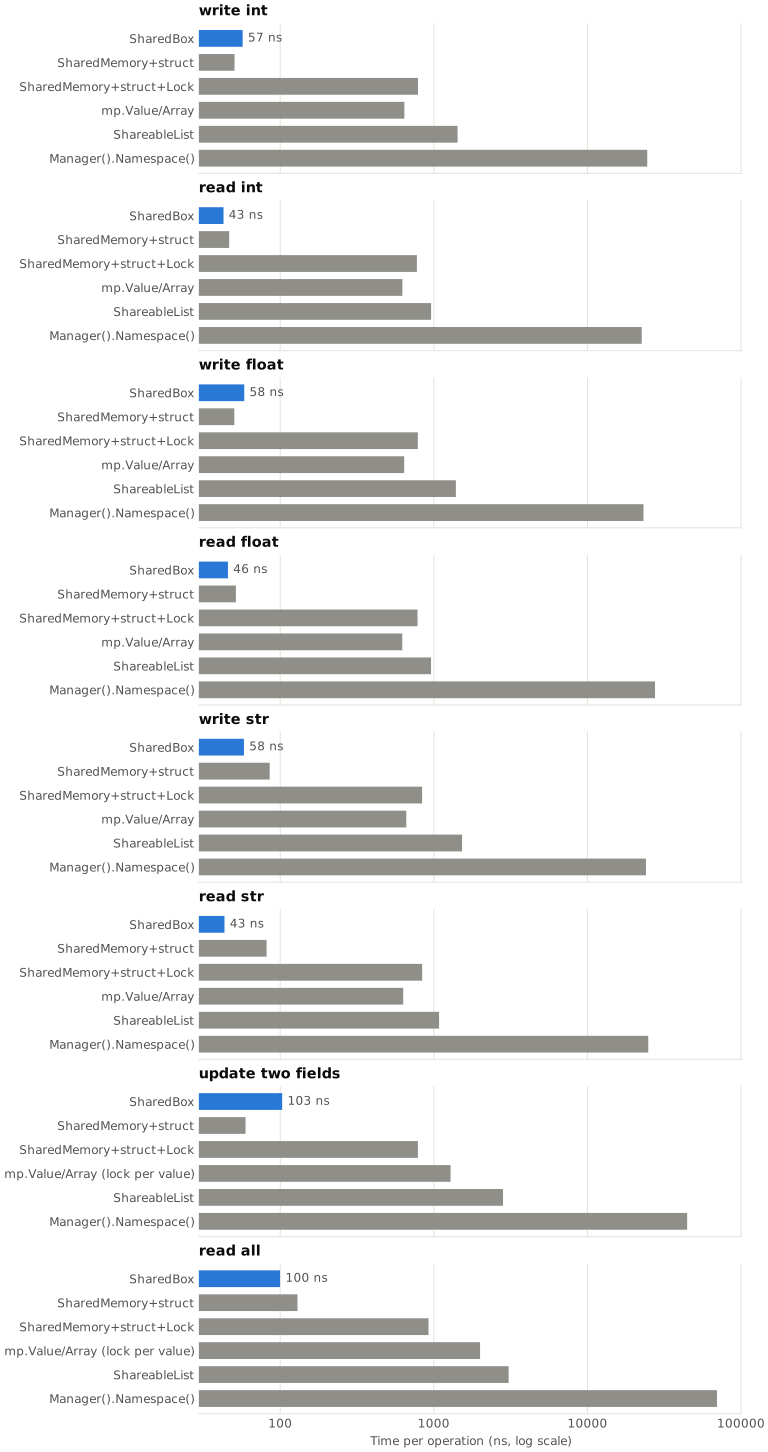
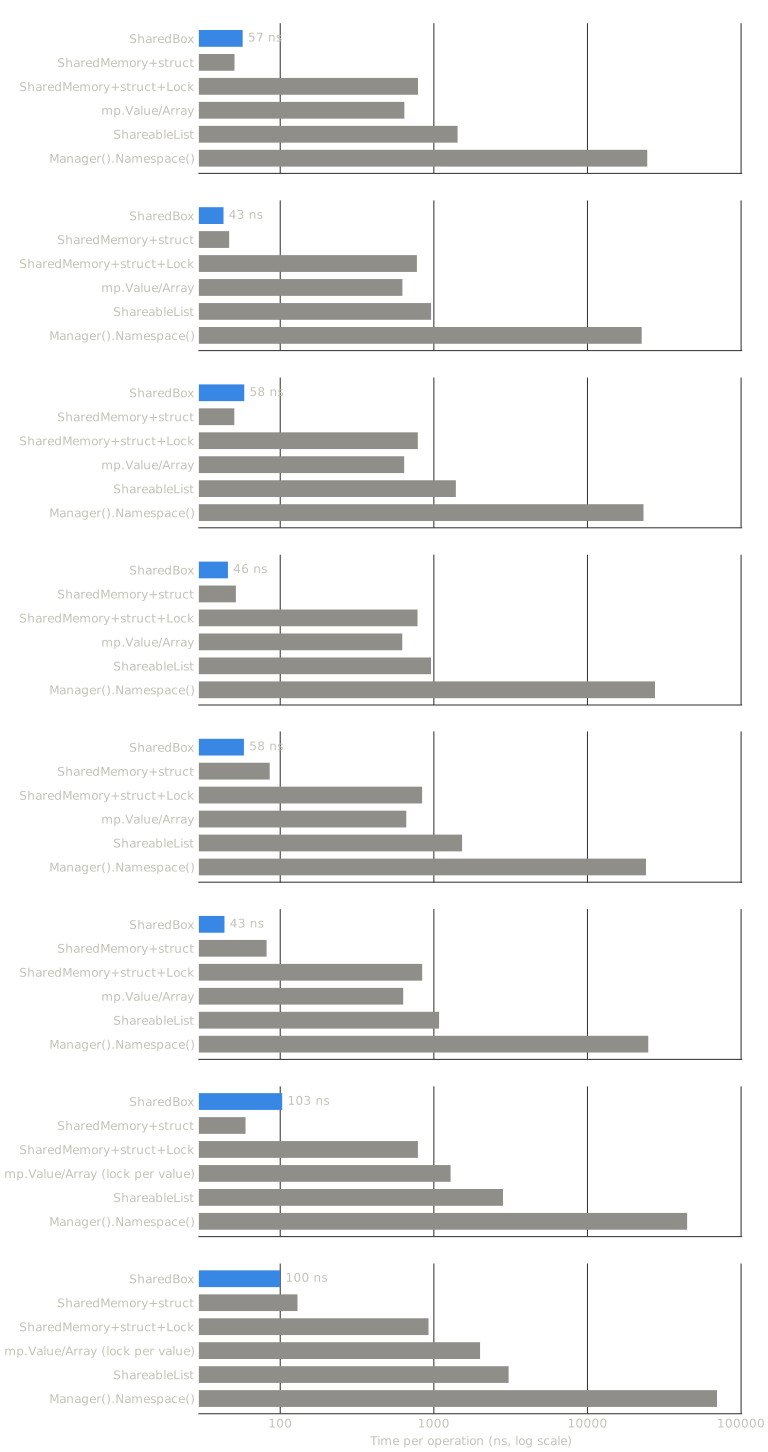
Each bar is the median time of one operation, timed by pyperf in a single process. The scale is logarithmic: each grid line is ten times the one before it.
Reading or writing one field of a
box takes 44 to 59 ns. That is 11 to 26 times less than
mp.Value, ShareableList or SharedMemory with a Lock, and about 400
to 620 times less than a Manager().Namespace(), which sends every access
to another process.
SharedMemory with struct and no lock is as fast for int and float
and slower for str, but it does nothing to stop a reader from seeing a
value that another process is halfway through writing. A box prevents
that with its sequence lock, as
Reading and writing explains.
Changing two fields with update takes 108
ns, about a seventh of one write under a Lock. That is less than two
separate writes, which take about 117 ns together. Reading every field with
snapshot takes 102 ns. SharedMemory
with struct and no lock packs or unpacks the same values in 60 ns and
131 ns, again without keeping a reader from seeing half of a write.
The numbers in the chart
| operation | SharedBox | SharedMemory+struct | SharedMemory+struct+Lock | mp.Value/Array | ShareableList | Manager().Namespace() |
|---|---|---|---|---|---|---|
| write int | 58 ns | 51 ns | 802 ns | 647 ns | 1.4 us | 28.8 us |
| read int | 45 ns | 47 ns | 782 ns | 630 ns | 969 ns | 22.8 us |
| write float | 59 ns | 50 ns | 807 ns | 650 ns | 1.4 us | 23.5 us |
| read float | 46 ns | 51 ns | 808 ns | 631 ns | 964 ns | 28.3 us |
| write str | 59 ns | 86 ns | 847 ns | 668 ns | 1.5 us | 28.5 us |
| read str | 44 ns | 82 ns | 859 ns | 643 ns | 1.1 us | 26.0 us |
| update two fields | 108 ns | 60 ns | 805 ns | 1.3 us (a lock per value) | 2.9 us | 45.8 us |
| read all | 102 ns | 131 ns | 929 ns | 2.0 us (a lock per value) | 3.1 us | 70.3 us |
Large values
In the same run, reading a 1 MiB array field took 190 us and writing one
took 19 us. The read is slower because it gets fresh memory for a new array
every time, which on Windows costs far more than the copy itself;
read_into copies into an array you
already have instead, and costs about what a write does. A box has one
write lock, so while a large value is being written, reads and writes of
every other field of that box wait; keeping a large array in a box of its
own avoids that.
A change sent to another process
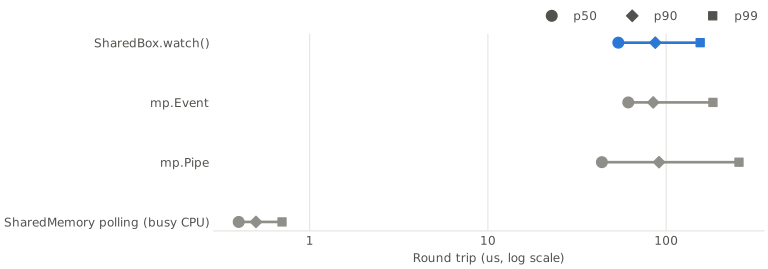
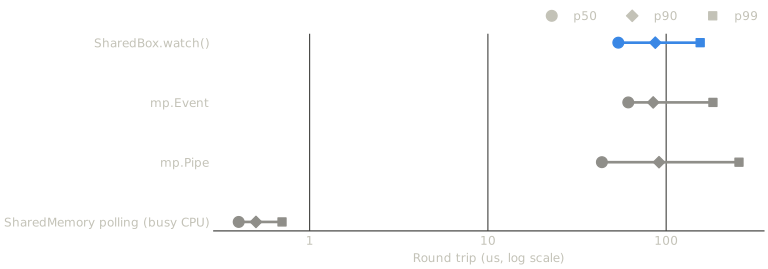
Each row is the time from writing a value in one process until a second process has seen it and answered back, over 5000 round trips. The dot is the median (p50), and the line runs to the 99th percentile (p99).
watch answers in 54 us at the median and
155 us at p99. mp.Event takes 61 us and 183 us, and mp.Pipe 44 us and
256 us. A loop that keeps reading SharedMemory answers in about 0.4 us,
but it keeps one CPU core busy on each side the whole time, while a
waiting watcher uses none;
Waiting for changes explains how it waits.